. . . (W)hatever your labors and aspirations in the noisy confusion of life, keep peace in your soul. With all its sham, drudgery, and broken dreams it is still a beautiful world.
from Disiderata by Max Ehrmann
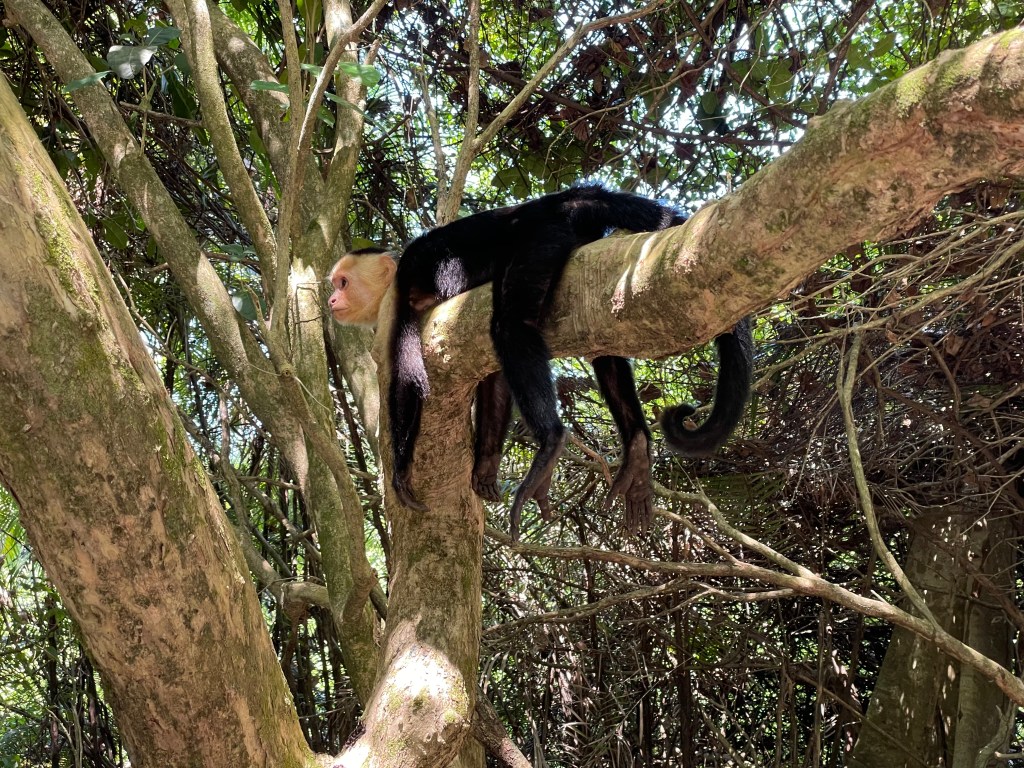
When I first heard the phrase monkey mafia I thought our tour guide was referring to a sinister group of thieves who hang out in the popular coastal towns, helping themselves to the wallets of vulnerable tourists. We were warned to keep our belongings close to our bodies and not to carry food with us.
It turned out that this branch of the Mafia really is a band of thieves, and they are monkeys. Why was that so difficult to figure out? They do not look very threatening. They are even cute, especially when they have a baby clutched to their breasts, and it is easy to understand why people want to feed them. They are white-throated capuchins, and these clever creatures are happy to help themselves to your backpack, unzipping the pockets with ease and grabbing whatever you might have with you that is edible.
Upon entry to Manuel Antonio National Park in Costa Rica visitors are required to open up their backpacks for a careful inspection by park staff, rather like going through airport security. Food is discarded, as is single use plastic and other items that might end up as litter. Reservations must be obtained in advance, not unlike the new system in many of our National Parks (see A Sunday Drive, February 18th of this year).
As I shared in that post, I have grieved the loss of freedom to explore our nation’s beautiful parks whenever I please and without long lines at the entry points. Visits to these parks are no longer wilderness experiences but more closely resemble crowded shopping malls. But the wonder is still there, and it is that wonder that such draconian restrictions strive to protect. Visitors to Manuel Antonio are required to remain on the trails. There are no side trails, no piles of used toilet paper, no plastic bottles, no litter of any kind. There is the jungle, and it is still dark and mysterious, filled with poisonous snakes that resemble winding green vines, nesting toucans, frogs that look like they are wearing blue jeans, and an amazing little lizard that rests by pools of water. It is appropriately named the Jesus Christ lizard because it walks on water.
The day after our visit to Manuel Antonio we went for a boat ride in a mangrove swamp, where our guide pointed out one of these lizards perched patiently on a branch extending over the water. We approached the lizard in our boat, close enough to startle the little creature, causing it to flee across the water. The three feet that it traversed from branch to shore was a blur, a half second of wonder as it made its way to the shore.
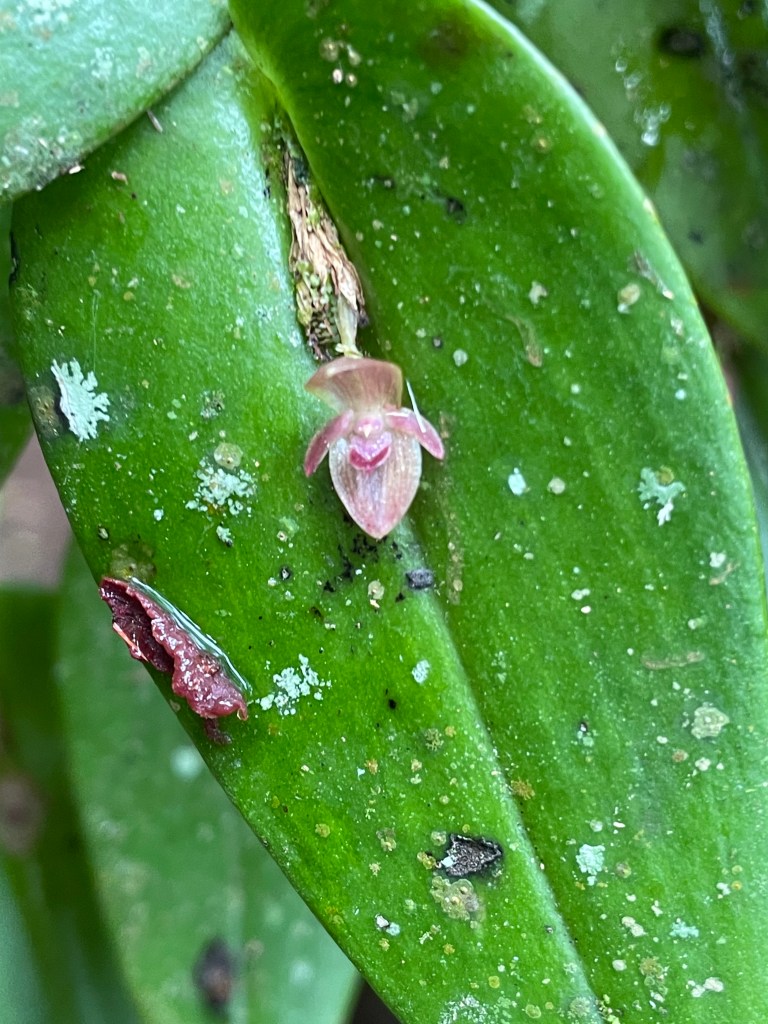
When people ask me about my trip to Costa Rica I tell them about the monkey thieves, the orchids that send up their blooms from the center of the leaf, the green snake whose bite is fatal in a few hours, and always about the Jesus Christ lizard.
The Tibetan Buddhist nun and teacher, Pema Chodron, teaches her students to begin each day with this simple mantra: “I wonder what will happen today.” Since my trip to Costa Rica I have modified it. I begin the day by reaching over and petting my dog, who has spent the night curled up next to me in the bed, and I say this out loud to her, “I wonder what wonders await us today.”
 The Solitude Trail