It seems that the more I distinguish my true needs from my wants, it is a shock to realize how little is enough.
Kathleen Norris
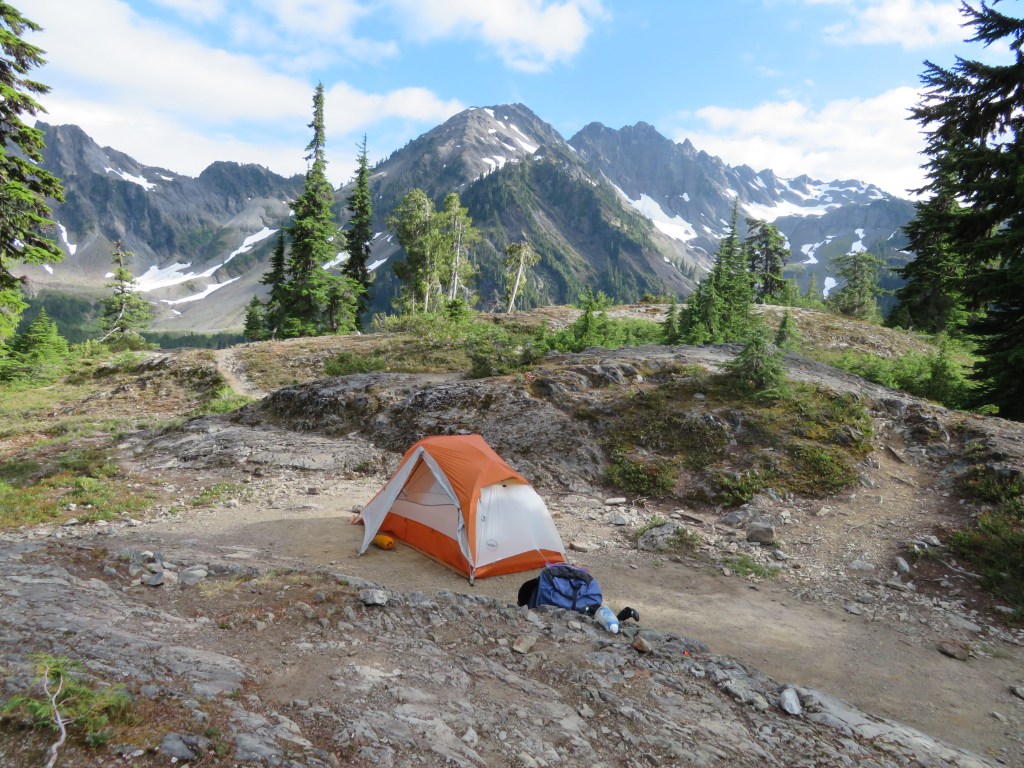
When I first became a serious backpacker in my late teens there were no sleeping pads available that were light enough to be carried on the trail. On car camping trips my family carried heavy air mattresses. As I recall my mother had an especially heavy one that was quite comfortable, but those old mattresses were much too heavy to be carried on one’s back to the next campsite everyday. Anyway, by then I had figured out that cushy mattresses were for wimps, and I most definitely was not a wimp.
When my friend Kathy and I hiked the Wonderland Trail around Mt. Rainier the summer after we graduated from high school we carried old Dacron sleeping bags and absolutely nothing to put on the ground beneath those bags. Fortunately Dacron does not compress like down, but the nights were still uncomfortable and quite cold, for we slept with only a light nylon poncho between our tired bodies and the cold ground. Much of that hike is close to or above timberline, and we had some stormy weather and very cold nights. That did not matter of course. We were on an adventure, and we were not wimps.
Nevertheless, the following year when someone told me about bubble wrap I was delighted to learn that there existed a light weight material that would keep me off the cold ground, if not all that comfortable. Yes, it was the same stuff that now arrives in your Amazon delivery box, wrapped around the fragile items to keep them in one piece. I bought a large roll, cut off a five foot long length and carried it strapped to one side of my pack for many years of hiking. By then apparently I had gotten over the wimp thing. I had a down sleeping bag, and the ground was much colder that it had been in a Dacron bag. Comfort seemed less important than being warm.
It was not a perfect solution though. Perfect solutions to sleeping on the ground were a long way off in the late sixties. It was lightweight but tore easily, and a single piece of bubble wrap lasted about one summer of backpacking before most of the air bubbles had been flattened and no longer provided insulation. When I rolled over during the night the bubbles would sometimes make a popping sound, rather like a ping pong ball bouncing on the table. This had a certain melodious quality to it but was not appreciated in the middle of the night. It was like sleeping in a popcorn popper.
A few years later the first official “sleeping pad” became available at REI. It was simply called a blue pad and consisted of a dense piece of blue foam that provided a thicker insulating layer between the ground and the body, but was harder than the bubble pad. I carried that blue pad wrapped around my sleeping bag strapped onto the bottom of my pack. It did not compress much and was therefore bulky to carry but was light weight.
It was with wonder and awe on a trip in the North Cascades with my friend Jan when I watched her remove a Therm-a-Rest out of her pack at the end of a long day of hiking. This seemed like a miraculous gift from the hiking gods, an air mattress that was light weight and filled with air just by opening a valve. Jan assured me that it was both comfortable and warm, but it would be several years before I carried my own Therm-a-Rest on the trail.
This transition in hiking equipment occurred about the same time Gore-Tex became available for lightweight rain gear that breathed, preventing the uncomfortable build up of sweat, a substantial improvement in hiking technology.
Yes, technology is the correct word, and it represented a profound change when gear went from simple and cheap, often purchased at Army surplus stores, to complicated and expensive. That complexity has marched along on the trail with the steady determination of progress. Many years later I now have a sophisticated Big Agnes air mattress that compresses to the size of a generous sausage roll and weighs only a few ounces. The best part is that it is wonderfully comfortable, and there is nor more popping in the night.
Back in the seventies when this new gear first became available I was a young single mom, struggling to balance graduate school, a part-time nursing job, and the needs of two little girls. I had to carefully budget for each new piece of equipment, so Gore-Tex and a Thermarest mattress were a ways off for me. It seemed like my favorite activity had somehow lost its innocence and become a lot more expensive. Setting up camp took longer. Packing up the next morning took longer still.
It used to be I went into the mountains on long backpacking trips to escape the complexities of life. No telephone, no traffic jams, no daily work place challenges. The challenges were straightforward and simple: setting up camp in a rain storm, carrying that heavy pack over a mountain pass, figuring out a fix for a broken O-ring.
Now my phone is in the pocket of my hiking skirt. . .yes, the expensive one with all the pockets, along with a Garmin InReach and a few other tools I have somehow come to believe I must have with me on the trail. I turn off notifications on my phone when I am hiking, but its very presence in my pocket is a reminder that the world is not as simple as it used to be.
As for whether or not I am a wimp because I now enjoy the comfort of an air mattress beneath my body and the cold hard ground, I have not figured that one out yet. More important, it does not seem to matter these days in my mid-seventies. It should not have mattered back in my twenties either. There is one thing that has not changed for me on the trail after more than fifty years of hiking. I do not carry my ego with me. It is much too heavy and an unnecessary complication.
 The Solitude Trail
Hi. I agree it’s only about the comfort:
weight ratio. BTW maybe we should have
a comfort to age ratio as well. The aged
bones and joints need things a bit more
cushy. ❤️Jan
<
div>
<
div>
<
div>
Sent from my iPhone
<
div dir=”ltr”>
<
blockquote type=”cite”>
LikeLike
Great post. You sure got all that right.
LikeLike